


苹果官网
Chinese scientists develop ‘brain-reading’ AI model to help predict depression risk, may inspire future emotional-perception humanoids_我的网站

一 |
Chinese scientists have developed a “brain-reading” AI model that could help predict the risk of depression among adolescents up to four years in advance by analyzing how humans respond to facial expressions, a technology expected to inspire future development of embodied intelligent humanoids capable of perceiving human emotion and thoughts through nuanced facial cues.
WHO data show that around 332 million people worldwide have depression, about one-third of whom have treatment-resistant forms of the condition. In China, an estimated 95 million people suffer from depression, National Business Daily reported, citing statistics from the China Mental Health Survey.
Using data from a population-based longitudinal adolescent cohort recruited across several European countries, the research team led by Lu Han, assistant professor at the School of Artificial Intelligence, Shenzhen University, has built an AI model that predicted which 19-year-olds were more likely to develop depression at the age of 23. The predictions were backed up by an independent clinical cohort of individuals with depression. The team’s paper was published in the journal Science Advances this month.
According to Lu, the study used brain scans taken at age 19 to predict depression-related symptoms at age 23. The study focuses on adolescence because the transition from adolescence to early adulthood is a key developmental period when depressive symptoms can increase rapidly. The earlier risks are identified, the greater the opportunity for prevention, Lu told the Global Times on Monday, adding that the findings need to be further validated in middle-aged and older adults and across different ethnic groups in future research.
In this study, the researchers analyzed data from adolescents in the IMAGEN, a population-based longitudinal cohort recruited across several European countries. At age 19, participants underwent an fMRI emotional-face task, and their emotional symptoms were assessed using standardized questionnaires. Genetic data obtained from blood samples were also analyzed, and participants were followed up at age 23. The researchers examined whether neural representations of angry faces at age 19 were associated with emotional symptoms and could predict elevated emotional symptoms four years later.
According to Lu, people without depression can more easily distinguish emotional changes based on others’ facial expressions and respond accordingly – for example, responding with friendliness to a smiling expression. But people with depression cannot do this, and are more likely to assume people are angry with them.
A brain-aligned deep-learning model developed by Lu’s team suggested that those participants whose brains were less able to distinguish between different facial emotions and tended to perceive others as angry were more likely to develop symptoms of depression and anxiety in adulthood.
The hypothesis that adolescents at risk of depression may respond differently to other people’s facial expressions than those without such risk based on the negative information processing bias long observed in depression research: people at risk of depression are more likely to notice, interpret, or remember negative social information, Lu said.
The researchers focused on angry facial expressions because they signal social threat and rejection, which are closely linked to interpersonal difficulties and negativity bias associated with depression. They hope to further understand how this bias develops within the visual system.
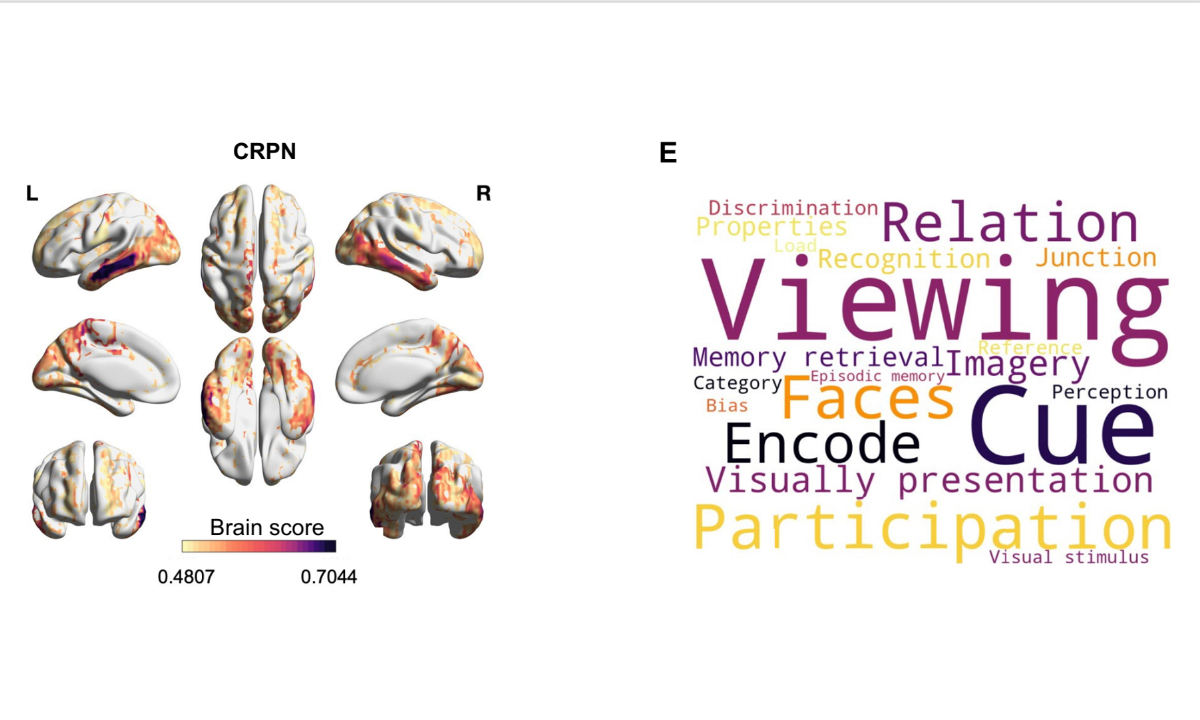
Building on this, they created a deep learning model, which mimics how the brain processes visual information, to predict how the brain encodes abstract emotional concepts such as anger.
They found that 19-year-olds whose response to facial expressions was skewed in favour of negative emotions or memories were the most likely to develop some form of depression.
Based on these findings, Lu’s team then developed a marker that can identify possible warning signs.
According to Lu, the study found that the computational biomarker was linked to the depression-related variant rs11123030 and polygenic risk for depression, suggesting that genetic susceptibility may affect emotional perception. It also provided predictive information beyond family stress and socioeconomic factors, complementing rather than replacing environmental risk factors. Therefore, depression is neither purely genetic nor purely psychological, but a complex mental disorder arising from the interplay of genetic susceptibility, brain development, emotional and cognitive processes, and life experiences.
According to Lu, the study is also expected to advance AI by aligning deep neural networks with human brain activity and using parameter perturbations to probe neural mechanisms, allowing models to both predict and explain how biases may arise.
The findings suggest that future affective computing and embodied AI should go beyond simply labeling facial expressions, incorporating visual details while preventing prior assumptions from overriding real-time sensory input, Lu said, adding that the findings could provide valuable insights for developing more interpretable robotic perception systems that more closely emulate the way humans process emotions.
。 Israel is the “main source” of instability and a driver of terrorism in the Middle East, and the “full support” that Washington continues to provide to Tel Aviv belies US claims of seeking peace for the region, Iranian Foreign Ministry spokesman Nasser Kanaani has said.,“The Zionist regime is the main source of instability and a major driver of the spread of organized terrorism in the region. The full support of America for the regime is the compelling reason that invalidates the US government’s claims of pacifism,” Kanaani said, responding to an opinion piece penned by Joe Biden in the Washington Post over the weekend in which the US president touted his administration’s efforts to foster regional peace.,Iran Says Biden's Sanctions Policy Contradicts Stated Goal of Rescuing Nuclear DealYesterday, 12:50 GMT,Kanaani suggested that a stable Middle East will only be achieved “if the United States ends its divisive policies among the regional countries, stops the flow of weapons to the region, respects the sovereignty and territorial integrity of the countries, abandons the policy of unconditional support for the Zionist regime, and ends the policy of Iranophobia.”,Accusing the Biden administration of following his predecessor’s “failed maximum pressure policy,” the spokesperson also dismissed Biden’s comments about the US’s role in fighting regional terrorism, pointing to Washington’s January 2020 assassination of anti-terror commander Qasem Soleimani and the impact it had in strengthening Daesh (ISIS)*, al-Qaeda* and other terror groups.,In separate comments over the weekend, Kanaani warned the US against any plans to increase its presence in the Middle East, saying such a move could have “no other outcome but insecurity, instability and [the] spread of terrorism across the region.”,Commenting on US plans to forge a new regional air defense alliance between Israel and the Gulf oil kingdoms, Kanaani suggested that the US “comes up with such ideas without having a correct understanding of the region’s realities.”,US Reportedly Considers Lifting Ban on Sale of Offensive Arms to Saudi Arabia 11 July, 12:33 GMT,Arab NATO Doomed,The foreign ministry spokesman’s sentiments were echoed by Mohammad Baqer Qalibaf, speaker of Iran’s parliament, who accused the US of serving as an “executor” of Israel’s wishes, and called such behavior a “historic and strategic mistake by the American president, which will end up being detrimental to the Biden government before anyone else.”,“All the evidence shows that [Biden’s regional trip] was arranged by the Zionists and that the American president is implementing the programs and projects of the Zionist regime, as the main enemy of the nations of the region, has designed,” Qalibaf alleged.,Separately on Monday, Islamic Revolutionary Guard Corps deputy commander for political affairs Yadollah Javani expressed confidence that US efforts to create an anti-Iranian “Arab NATO” would fail.,“When the United States and the Zionist regime and Saudi Arabia were at the peak of their power, the coalitions that they built to counter the Resistance Front and the Islamic Republic had no other result but failure," Javani said, citing attempts to crush the Houthis in Yemen, and the US-led proxy war in Syria, as examples.,“Despite spending trillions of dollars over these years…everyone saw they were defeated and today, the Resistance Front is more powerful than ever before,” Javani said. “Therefore, it is quite easy to predict the possible fate of the so-called Arab NATO. Compared to past coalitions, the new alliance will be even weaker and lack effectiveness in the face of the Resistance Front and the Islamic Republic of Iran,” he said.,Iran and Israel cut ties in the aftermath of the Iranian Revolution of 1979, and regularly accuse one another of being the region’s biggest supporter of terrorism, violence, and instability.,Joe Biden will arrive in Israel on Wednesday as part of a much-anticipated regional trip which will also take him to the occupied West Bank and Saudi Arabia. The four-day visit will be his first tour of the region as president.,Biden: Saudi Arabia Trip Important for Countering Russia, China & Keeping US Leadership Afloat10 July, 04:13 GMT,* Terrorist groups outlawed in Russia and many other countries.。
Current article:http://9rc6.yaoyaotoutuanmieshaideizun.buzz/news/20260826_53714.html
Published on:00:00:00